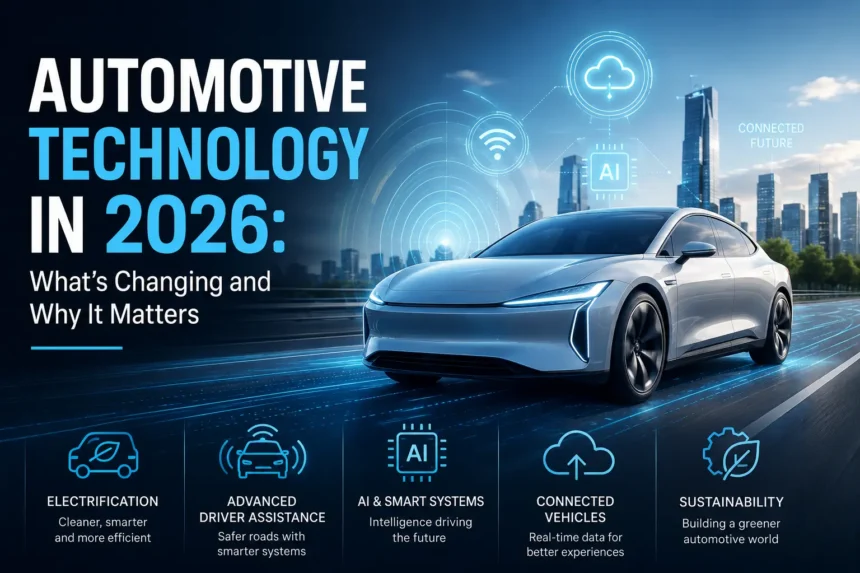
Automotive technology is evolving at a rapidly increasing pace. If you believe that cars are merely machines that move people from place to place, then don’t. Don’t think like that, cars are not just vehicles that move people. The cars of today are almost like mobile phones with wheels. They are connected to the internet, automatically update their software and some can drive themselves. Let’s dive into the most significant automotive technology trends taking place today and how they impact regular folks like you.
- The Big Shift: Cars Are No Longer Just Cars
- 1. Electric Vehicles Are Everywhere But Hybrids Are Rising
- 2. Software-Defined Vehicles: Cars That Update Like Your Phone
- 3. Self-Driving Cars: Still a Work in Progress
- 4. Alternative Fuels: Not Everything Will Run on Batteries
- 5. Connected Cars and 5G: The Internet of Vehicles
- 6. Advanced Safety Features: Technology That Protects Lives
- 7. Mobility-as-a-Service: You Don’t Have to Own a Car
- 8. 3D Printing and VR/AR: Behind the Scenes Innovation
- Supply Chain: The Invisible Challenge
- Final Thoughts
- Frequently Asked Questions
- Q1. What is meant by automotive technology?
- Q2. What are the top automotive technology trends for 2026?
- Q3. Will you be able to purchase a driverless car in 2026?
- Q4. Why are hybrid cars more popular than electric cars?
- Q5. What are the benefits of 5G to automotive technology?
- Q6. What does ‘Mobility-as-a-Service’ (MaaS) mean?
The Big Shift: Cars Are No Longer Just Cars
For over 100 years carmakers focused on one main thing making cars faster and cheaper to build. But now the focus has completely shifted. Thanks to new automotive trends, a car today is expected to be smart, safe, clean and connected all at the same time.
This shift is not just about cool gadgets. It is being driven by real problems: pollution, traffic accidents, fuel shortages and the need for faster, more flexible travel. Automotive industry trends in 2026 are responding to all of these challenges together.
1. Electric Vehicles Are Everywhere But Hybrids Are Rising
Electric Vehicles (EVs) have been a hot topic in recent years regarding automotive technology. These vehicles are battery powered (not petrol or diesel) so they do not produce direct emissions. Battery technology has also made significant advances. Solid state batteries are now replacing older lithium ion batteries and they are safer, longer-lasting and have more energy storage capacity.
But 2026 is also experiencing a slowdown in the growth of pure EVs. Why? A few reasons:
- Charging points aren’t ubiquitous yet
- The cost of producing and purchasing electric cars is high.
- The trade war between China and the West is impacting supply
This is why there has been a greater emphasis by many car manufacturers in the development of hybrid vehicles which combine a petrol engine with an electric motor. These are all advantages of hybrids—no charging is required, they reduce fuel consumption and they are less expensive. A sensible compromise in the meantime as the world works out full electrification.
China is also a big player in this segment. China is the country making and selling the most electric cars, and is projected to sell more electric cars than petrol cars in 2026. It’s a significant milestone in the history of new car technology.
2. Software-Defined Vehicles: Cars That Update Like Your Phone
Here’s a new vehicle technology trend that many people don’t know about yet software-defined vehicles (SDVs). These are cars where almost everything is controlled by software. Braking, steering, entertainment, safety systems all managed through code that can be updated over the air, just like your phone’s apps.
This means your car can actually get better over time after you buy it. Car companies like Honda are already partnering with tech giants like Amazon Web Services to make this happen faster. SDVs were among the major trends that took center stage at the Consumer Electronics Show (CES) 2026, highlighting its growing relevance in the automotive sector.
3. Self-Driving Cars: Still a Work in Progress
Autonomous driving is one of the most exciting and most misunderstood automotive technology trends of our time. The truth is fully self driving cars that need zero human input are still several years away. Right now we have cars that can handle certain conditions on their own (called Level 3 automation) and a few vehicles testing higher levels of autonomy in specific areas.
But progress is real. Companies are constantly testing and improving this technology. Advanced features like automatic lane changing, collision warnings, and emergency braking are already common in new cars. These are part of what’s called ADAS Advanced Driver Assistance Systems and they’re saving lives right now.
4. Alternative Fuels: Not Everything Will Run on Batteries
While EVs get most of the attention, not every car in the world will switch to batteries. That’s where new car technology around alternative fuels becomes important.
E-fuels are synthetic fuels made by combining CO2 with renewable electricity. They can fuel conventional combustion engines, but have much less climate impact. The European Commission has accepted that vehicles using e-fuel will be able to be sold after 2035 provided there is no net climate impact. This opens up a whole new path for the automotive industry especially for car lovers who prefer traditional engines.
5. Connected Cars and 5G: The Internet of Vehicles
Automotive technology is no longer about the car; it’s about how the car relates to the external world. In real time, connected vehicles can exchange information with the traffic light, other vehicles, road sensors and even pedestrians. This is made possible with the help of super-fast and capable 5G technology which can manage a massive amount of data.
Infotainment systems are becoming smarter inside the car, as well. They are linked to your cell phone, will listen to you, and will show you large, high resolution screens. Automotive trends for 2026 suggest even greater infotainment advancement, enhanced AI capabilities, and improved cybersecurity measures to ensure your information remains secure.
6. Advanced Safety Features: Technology That Protects Lives
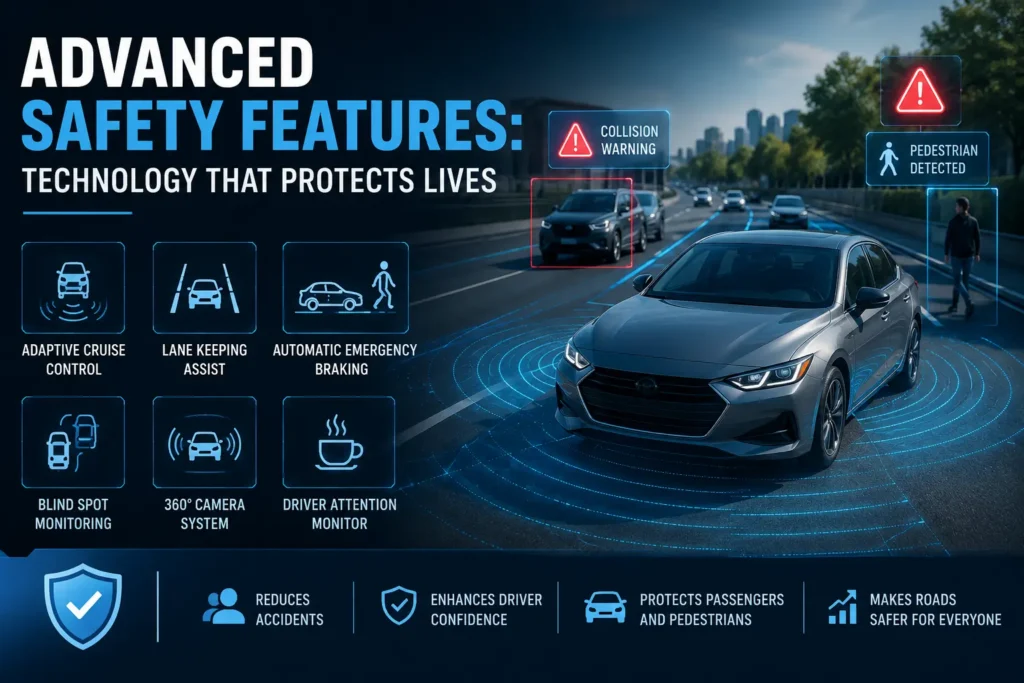
In any automotive industry trend, safety is always a key consideration, and 2026 is no exception. Indeed, the EU has recently introduced several safety standards that dictate that all new cars sold in Europe must comply with. These include:
- Intelligent speed assistance (safety warning or reduction of speed if too fast)
- Advanced emergency braking
- Protection systems for pedestrians and cyclists
- Data recorders (similar to a “black box” used on airplanes)
Self-driving technology is also being used by companies such as BMW to incorporate such functions as automatically changing lanes and unconsciously stopping an electric vehicle in safety mode. These are not futuristic ideas at this time – they’re in cars now.
7. Mobility-as-a-Service: You Don’t Have to Own a Car
Mobility-as-a-Service (MaaS) is one of the newer automotive technology trends that are altering the way people think about transportation. It’s a no-brainer. If you don’t own a car, you can rent a bike, use a taxi, public transport or car-sharing in one place through an app.
This is gaining wide popularity in cities where it is costly to own a car and parking is a nightmare. MaaS platforms are streamlining the daily journey for millions of users throughout the world with improved 4G/5G connectivity and intelligent applications.
8. 3D Printing and VR/AR: Behind the Scenes Innovation
Not everything new on the car tech front is obvious to a car buyer. Manufacturers are employing 3D printing techniques to create lighter, stronger parts quicker and at lower costs than traditional techniques, behind the scenes. This speeds up the design and testing process for new vehicles.
In addition, Virtual Reality (VR) and Augmented Reality (AR) are being incorporated into car factories for the training of workers as well as to assist customers in visualizing and customizing their cars prior to purchase. The entire process from design to sale is making it more and more smooth and efficient.
Supply Chain: The Invisible Challenge
Although it doesn’t get a lot of attention in automotive industry trends, there is still a continuing supply chain crisis. Semiconductors, batteries and other critical components continue to be in short supply for car makers. Reasons include:
- Tensions related to geopolitics and trade conflicts.
- The growing demand for specific components for EVs.
- There is a shortage of staff at the factories.
To address this, many firms are diversifying their suppliers, and establishing local production lines and investing in automation. That’s going to take time, however, so supply chain issues are likely to impact automotive technology production through 2026.
Final Thoughts
The world of automotive technology is evolving at a speed that was unimaginable just a decade ago. It’s not science fiction, it’s the present and present – electric and hybrid cars, self driving systems, connected cars, smart safety features and more.
If you’re considering purchasing a car or are a student or simply interested in the future of the auto industry, you will be able to see where the world is headed if you know these emerging automotive technology trends. Tomorrow’s car is being built today. It is smarter, safer and cleaner than all of the previous models.
The trends in the automotive industry that are predicted for 2026 are only getting started. Whether you’re driving, walking, or cycling, the vehicles you’re driving and how you think about travel will change as technology continues to evolve.
Frequently Asked Questions
Q1. What is meant by automotive technology?
In the automotive sector, technology encompasses everything from electric motors and safety sensors to connected infotainment systems and more.
Q2. What are the top automotive technology trends for 2026?
Electric vehicles, software defined vehicles, autonomous vehicles, 5G connectivity and advanced safety systems which are now standard in new cars, are the largest trends.
Q3. Will you be able to purchase a driverless car in 2026?
Cars with full autonomy are not yet in the market, but many new cars already have Level 3 features, such as lane assist, collision warning and automatic braking.
Q4. Why are hybrid cars more popular than electric cars?
Hybrids will also be even cheaper to purchase than 100% electric vehicles, do not require charging stations and can save on fuel costs – making them a more viable solution for most consumers for now.
Q5. What are the benefits of 5G to automotive technology?
By connecting vehicles to traffic lights and other traffic cones and vehicles in real-time, 5G makes driving safer, smarter and more connected than ever before.
Q6. What does ‘Mobility-as-a-Service’ (MaaS) mean?
MaaS is an integrated system in which you can book different modes of transport (buses, taxis, bikes, shared cars) without having to own a car yourself.